For any avid fans of cinema (or art in general for that matter) May is likely to be built around excitement for one event; the release of Wes Anderson’s new film. Known for his extravagant set design and one-of-a-kind use of colour, the Fantastic Mr Fox director graces our screens once again with his new offering, The Phoenician Scheme. Featuring a suitably all-star cast, Anderson’s latest venture promises more of his trademark surreal visuals accompanied by curious but engaging dialogue.
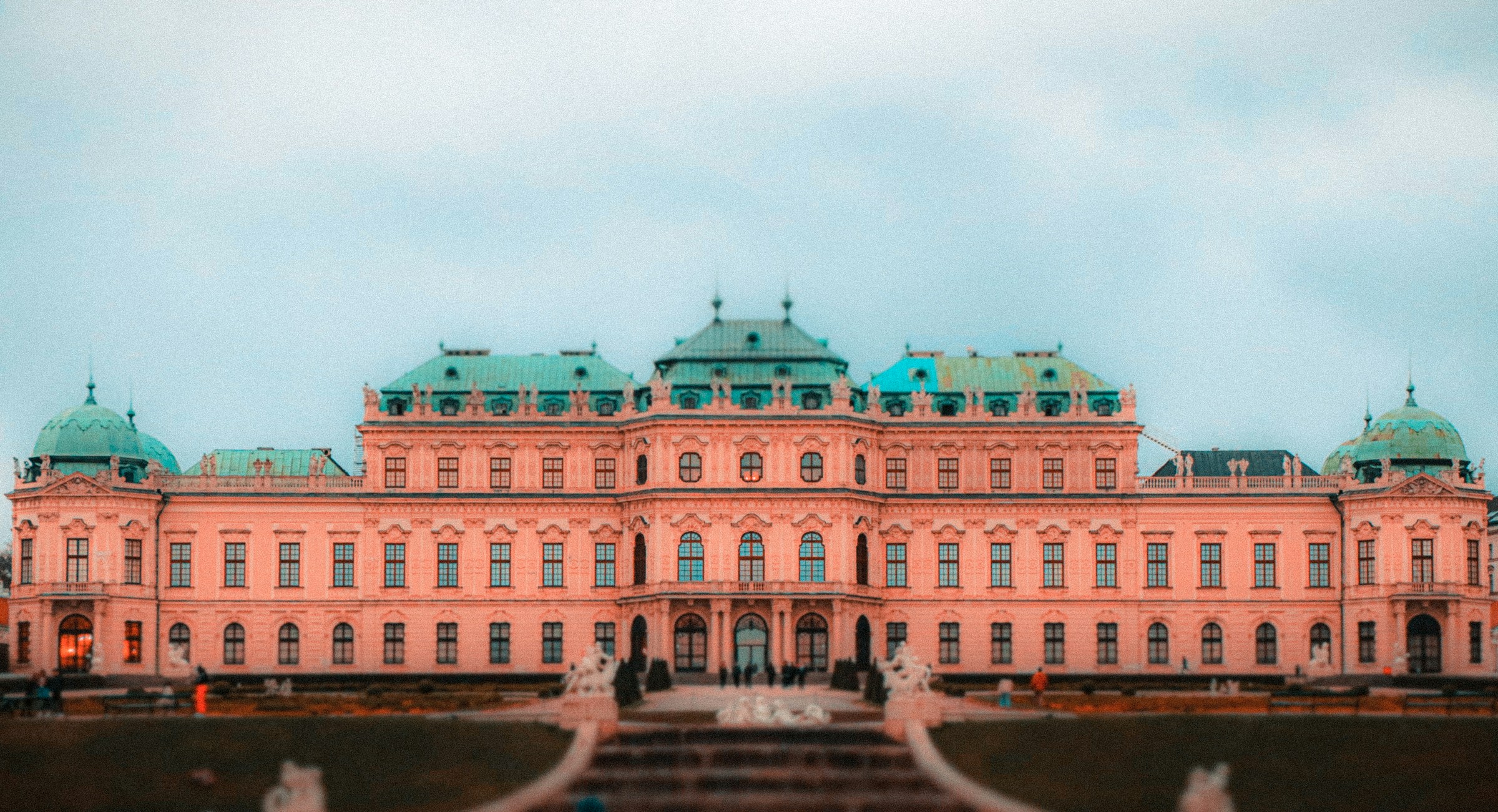
Any fan of Anderson’s will be well acquainted with his cinematic weapon of choice- symmetry. You’d be hard pressed to find a scene from his filmography that isn’t perfectly lined up, a choice that has drawn him both praise and criticism over the years. If you’re someone who sees beauty in Anderson’s pastel world, you’re going to want to follow along as we look at some of the things to keep in mind when using symmetry within your own home.
Photo by Emanuel Haas on Unsplash
The Science of Symmetry
In its simplest form, symmetry refers to a balanced arrangement where elements are mirrored or repeated on either side of a central axis. This axis might be a fireplace, a bed, a doorway, or even an imaginary vertical line that runs through the middle of a room. There are two main types: formal (or bilateral) symmetry, which is when two sides are exact mirror images, and informal (or asymmetrical) balance, where elements differ but carry equal visual weight. In interior design, formal symmetry tends to feel more traditional and structured, while informal symmetry adds variety without losing balance.
What kind of symmetry you want to go for all depends on your own unique tastes. Neither one has any advantages over the other, but they do create different kinds of balance. Whilst both forms of symmetry will create an aligned image, informal symmetry allows for much more freedom and less of a uniform arrangement, and for this reason can be easier to implement in the average home.
Around the House
Living Room
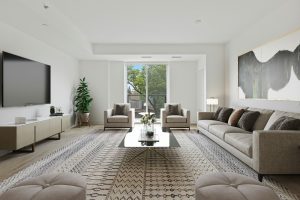
Symmetry is useful in our living rooms to create a sense of order and balance in what can often be one of the most chaotic rooms in the house. However, this element bring with it it’s own challenges, often featuring a variety of elements such as paintings, furniture and decorations. For that reason, it’s easier to use informal symmetry in busy spaces like the living room, mirroring features based on their significance in the room rather than lining up exactly symmetrical colours and shapes. Embracing these elements of asymmetry such as differing colours or patterns can ensure your end product is a balanced landscape, that still has charm and has a natural feeling.
Bedroom
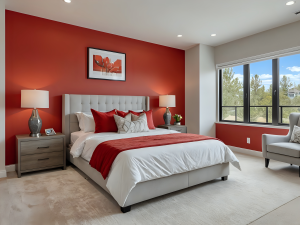
The bedroom is in many ways the opposite to the living room. A calm space where you will retreat to wind down as opposed to being filled with activity, the bedroom also (on average) has less of a variety of features to deal with. The bed obviously makes a strong centrepiece, and flanking your sleeping space with symmetrical bedside tables and wall art will leave you with a bedroom even Wes would be jealous of. The result is restful and composed—exactly the kind of energy you want in a space meant for sleep and relaxation.
Dining rooms
Despite what you might think, despite being another busy room with lots of foot traffic, dining rooms are actually also quite suited to formal symmetry if you so intended. Any dining room with a large dining table for a centrepiece is a great focus point for the room, and the inclusion of a centered chandelier overhead and a buffet or console table on one wall, styled with matching lamps, mirrors, or framed art is a great compliment to a symmetrical look.
Hallways
Hallways offer up a lot of freedom, with colours and decorations being your main signifiers of symmetry along a lengthy open space. Your hallways will often dictate people’s first impression of your home, so try and think of the overall balance your trying to achieve with your home and how you want people to be greeted when they enter. It’s important to keep this in mind as the creativity and options available can become puzzling, and drawing on the rest of your home as inspiration is a good way to stay cohesive and make sure your rooms flow together without too much contrast.
All or Northing
Embracing an artistic vision like Anderson’s is no small feat, and if you want your abode to resemble The Grand Budapest Hotel it’s going to require commitment. Not only commitment, but also the acknowledgement that going all in with symmetry will create a one-of-a-kind look; that won’t be for everyone. As with any drastic interior design choice, you can expect the results to be polarizing, but if you’re looking towards the man that’s never out of line for inspiration, you should be aiming for nothing less.