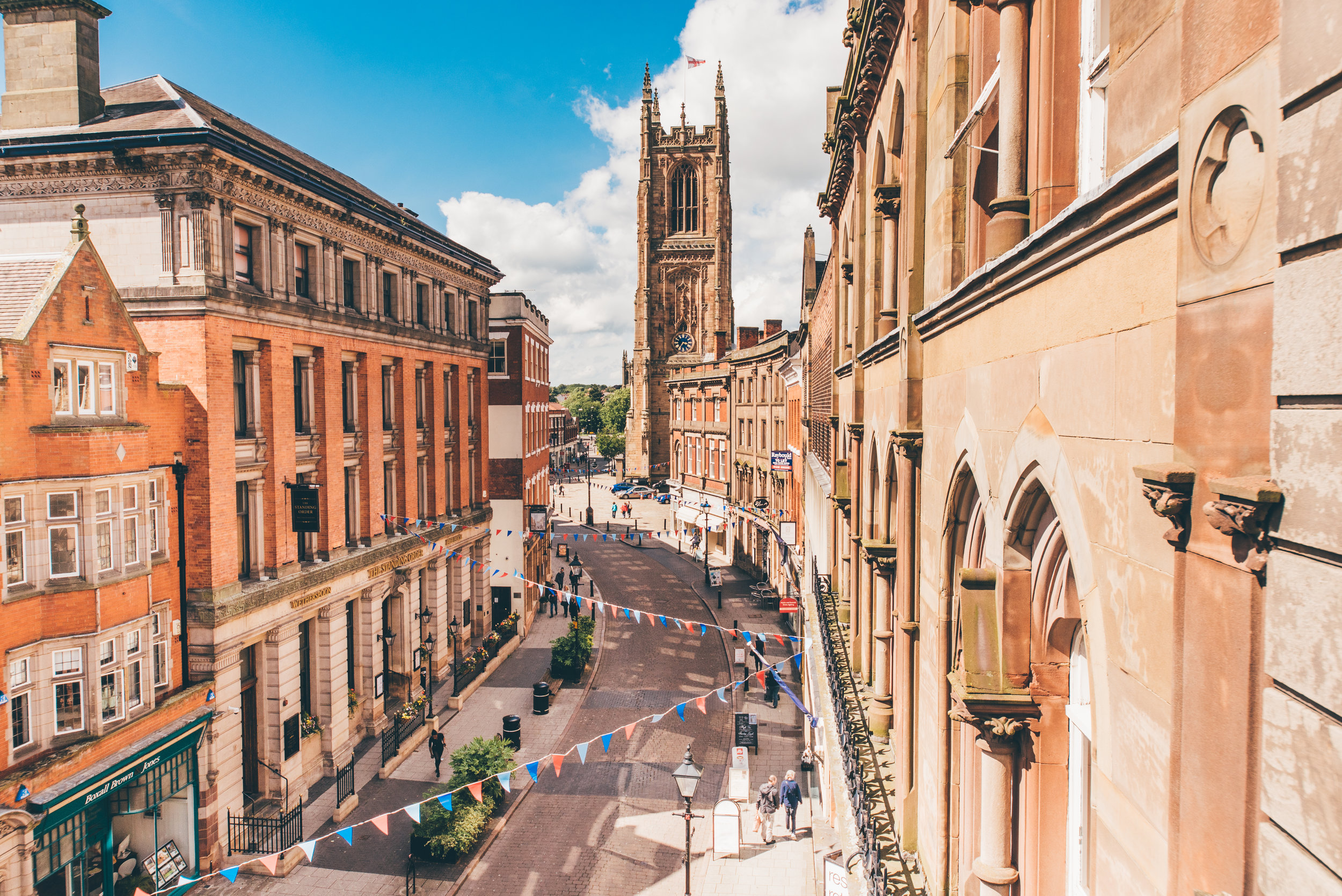
For this issues Destination, we’re going to be looking at the city of Derby, which was first established under the name of Derventio, by the Romans. The city began it’s history as a market town, but would grow to become a thriving city at the forefront of the industrial revolution, thanks to innovative practices that led to it being the home of one of Britain’s earliest factories.
Today, Derby is a cultural city, with beautiful natural landscapes and a wide range of attractions that celebrate it’s rich heritage. The city is host to numerous events and festivals throughout the year, and for anyone looking to relocate in the midlands region, Derby should be near the top of your list of potential destinations.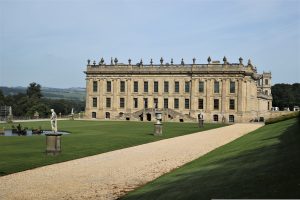
History
After beginning as the roman settlement of Derventio, the town changed hands after being captured by the Anglo-Saxons and later the Vikings, first appearing under the name of Derby on early maps as far back as 1610. Derby was involved in many conflicts throughout the years, fighting in defense of Nottingham during the civil war of 1642-1646, in battles such as the siege of Lichfield and the battle of Hopton Heath.
Derby later picked up momentum during the industrial revolution 1717, when it became the site of Britain’s first water-powered silk mill, built by John Lombe and George Sorocold. Lombe had reportedly stolen the secrets of silk-throwing from Italy, and was later allegedly poisoned in revenge by those he had stolen from.
Shrovetide football, a primitive form of football in which games were played between entire townships with unlimited players, and essentially involved huge melee’s in which players vied by any means necessary to drag the ball to goal posts in either town, was played in Derby frequently as early as the 12th century. There were several attempts to ban the game, described in 1846 as “the barbarous and disgusting play of Foot-Ball, which for a great number of years has annually disgraced our town”, and in the same year the military were drafted in order to halt the proceedings of the game, but ultimately failed. The game was eventually banned, although it was later played once again in 1870.
Derby’s role as an innovator in Britain carried on throughout the years, and Derby was one of the leading forces that helped to fuel the industrial revolution, hosting many groundbreaking technologies. The city also produced significant contributions to art and culture, home to significant figures such as Erasmus Darwin (Charles Darwin’s grandfather), and Henry Hutchinson, a significant political player who’s contribution to society in his will was instrumental in founding the London School of Economics.
Entertainment
That was only a slice of Derby’s rich history, and for anyone visiting the city today they have the opportunity to explore it themselves through it’s many entertaining museums. The Museum of Making is a recognised UNESCO world Heritage Site, held at the very site which saw Derby’s original silk mill once stood over 300 years ago. The museum is dedicated to the history of innovation in Derby, celebrating the forward-thinking mindset that helped to put Derby at the forefront of industry and philosophy.
For those looking for a more macabre look into Derby’s past, there is also Derby Gaol, a historic jail site that would have been used between 1756 and 1828. The jail’s restored form now features two holding cells, although it is speculated in it’s usage the network may have spanned under neighbouring buildings to form a much larger system of cells. Today, the jail has been restored to function as an interactive museum, that is thought to be one of the most haunted locations in the country. The owner holds guided tours throughout the Gaol, as well as even offering lock ins on some Friday and Saturday nights, allowing visitors to get a first-hand experience of what may well have been some convicts last nights.
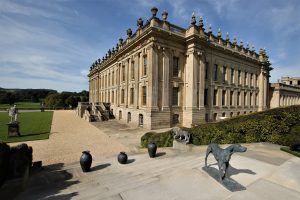
Chatsworth House is another key attraction in Derbyshire, a unique chance to explore Derby’s history whilst taking in it’s gorgeous natural surroundings all at the same time. With a rich history, the stunning architecture that stands proudly in the heart of Derbyshire was completed in 1708, with additions carrying on until 1840. Today, Chatsworth House is a breathtaking stately home that gives visitors an opportunity to explore the surrounding countryside, tour the house and examine pieces of art and history that span 4,000 years, and for younger visitors there’s a farmyard and playground to keep them entertained for the whole day.
There is also Bluebells, a finalist for the Peak District Derbyshire & Derby Tourism Awards 2025, which provides a look into farmyard life alongside producing expertly crafted artisan ice cream. The farm has been family ran for the last three generations, beginning in 1953, and since 2008 have been producing their own line of luxury ice cream, which they serve on the farm. As well as producing and serving their Ice Cream, Bluebells farm also has over 200 animals to interact with, and take pride in letting people get to know their animals and form a stronger connection with the source of their food and the farming lifestyle. Bluebells is a perfect day out for the family, and visitors of all ages will come away with a smile on their faces.
Nightlife & Food
Derby also boasts a thriving night life scene, being named in a study in 2023 as the 16th best night out in the UK, higher than nearby midlands hub Nottingham. Whether you are wanting to cut loose with a night on the town, or simply a few drinks from any of the cities welcoming pubs or bars, there’ll be no shortage of options for you to make your weekend a memorable one.
On the other hand, if you’re looking to take a dive into the cities culinary side, Derby has no shortage of food options that can be sure to satisfy even the most diverse of tastes. Derby has grown into a city of culture, and the proof really is in the pudding, with a wide range of food options waiting to be discovered.
One such spot is Ebi Sushi, a Japanese restaurant hidden away near Abbey Street that is increasingly regarded by critics and beloved by locals. A second home of the Japanese community in Derby, Ebi Sushi is notorious as the best place for Japanese food in the midlands, and over time the venue has only grown in popularity.
If you’re looking to quench your thirst rather than a bite to eat, there’s no better place to summarise Derby’s historical charm than the Abbey pub. A grade 2 historical listed building, that began life as the outhouse to, you guessed it, an Abbey, the building was converted into a pub in 1977, and has since been a hot favourite for local drinkers to enjoy a pint in a historical setting. The antiquated charm of the Abbey is Derby through and through; friendly, welcoming, and a modern nod to the proud history that made Derby the city it is today.