Fire and carbon monoxide (CO) alarms play a crucial role in the protection of homes from fire hazards. When buying a fire or CO alarm, it’s essential to consider the type of room, the grade of alarm, and requirements of the home itself. In this fire alarm buying guide, we’ll detail the different alarm options and which ones are best suited for various areas of the home.
Optical Smoke Alarms
Optical smoke alarms use infrared light to detect smoke. When enough smoke enters the sensor chamber, the particles scatter the infrared light onto a receiver that would usually not see the light pulses, this causes the alarm to activate. These types of sensors are less susceptible to interference from cooking fumes than ionisation alarms.
The optical sensor is better at detecting slow, smouldering fires. This makes an optical smoke alarm perfect for rooms such as the hallway, landing, bedroom, or living room, where fires may involve burning carpet caused by overheated wiring, or slow-burning fires.
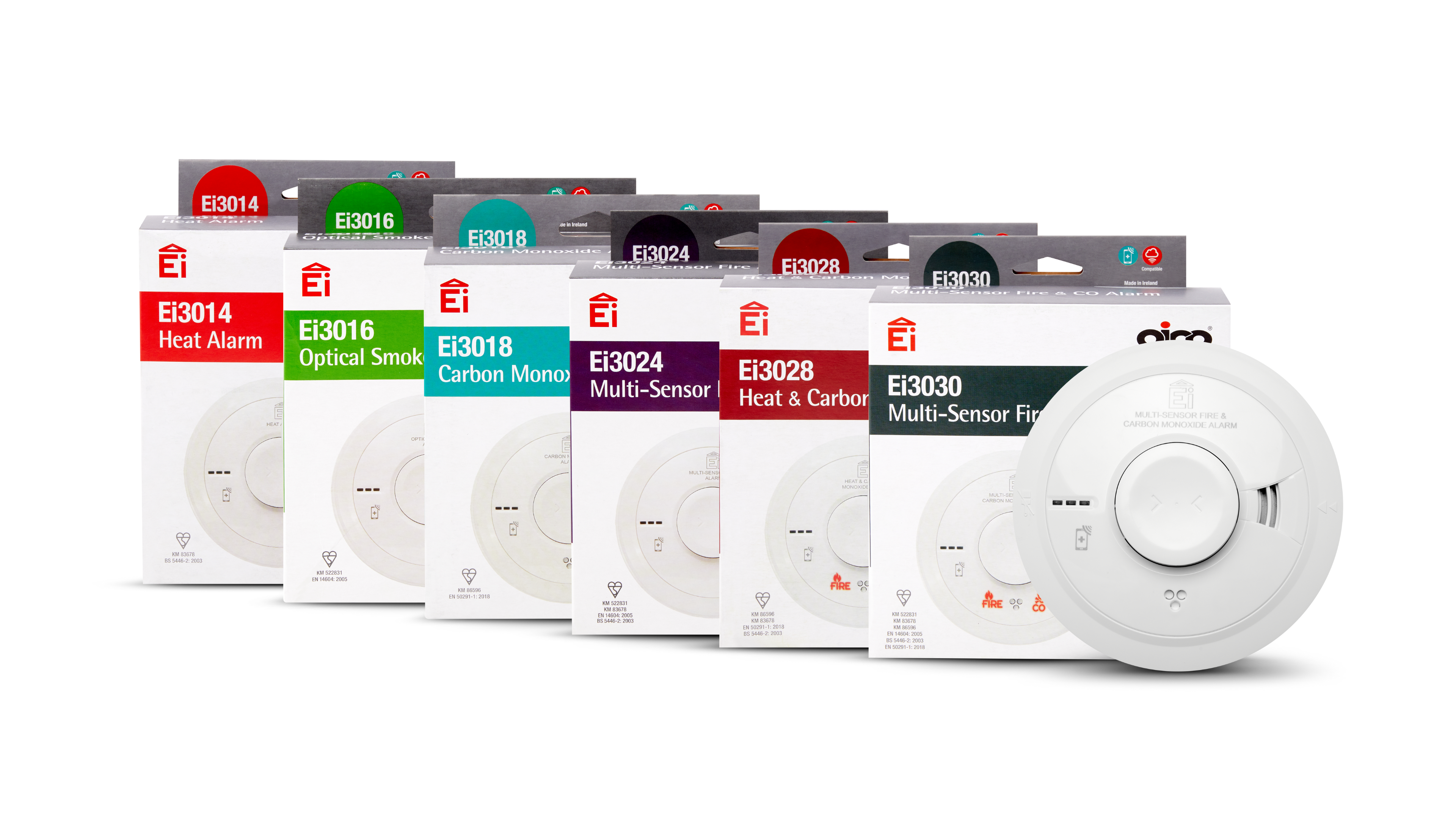
Aico’s Ei3016 Optical Smoke Alarm contains a high-performance optical sensor. Its lithium battery back-up, in use when mains power is not available, eliminates the need for battery replacement in its 10-year life. An alternative alarm would be the Ei650iRF RadioLINK+ Battery Optical Alarm, which is standalone and operated by a 10-year lithium battery.
Heat Alarms
Heat alarms use a heat sensor to detect fast, flaming fires, best suited for fires caused by cooking or flammable liquids, making them perfect for the kitchen or garage. As they are not triggered by smoke, heat alarms are much less prone to false alarms in these areas.
Aico’s Ei3014 Heat Alarm contains a high-performance thermistor heat sensor, designed to provide a faster alarm response when triggered by temperatures 58°C and over. The Ei630iRF RadioLINK+ Battery Heat Alarm would be the suitable option if a battery-powered unit is required, and connects to other RadioLINK+ capable alarms.
Multi-Sensor Fire Alarms
Using a multi-sensor alarm can be useful when needing to install more than one sensor type in the same location, without having to install multiple alarms.
An alarm that contains both a smoke and heat sensor is called a fire alarm. This type of alarm is acceptable for bedrooms, hallways, landings, living rooms and open plan kitchen-living or kitchen-dining areas.
The Ei3024 Multi-Sensor Fire Alarm can be used in any of these areas to provide detection for all fire types. Its smart software allows the sensors to work together, but also independently. Intelligent dust compensation and its mesh insect shield around the optical sensor reduces the risk of false alarms. Aico’s Ei660iRF RadioLINK+ Multi-Sensor Fire Alarm is their battery-operated heat and smoke alarm, and can connect to other RadioLINK+ devices.
For an all-round response to fire and carbon monoxide, opt for the Ei3030 Multi-Sensor Fire & CO Alarm, with all three sensors in one device. Suitable for any bedrooms, dining rooms, hallways, landings, living rooms and lofts which contain fuel-burning appliances, the Ei3030 has it all.
Carbon Monoxide Alarms
With CO being a tasteless, colourless, and odourless gas, having a high-performance detector in place is vital for the safety of your household. In the event of a CO emergency, having a CO alarm will alert you as soon as dangerous levels are present and rising.
The Ei3018 Carbon Monoxide Alarm has a proven electrochemical sensor to monitor CO levels. With a different sounder pattern to differentiate the CO alarm to any fire alarms in the house, the Ei3018 also features different flash rates of its red LED to indicate the level of CO detected. For the battery-operated version, the Ei208WRF RadioLINK+ Battery Carbon Monoxide Alarm would be suitable.
For more information on fire and CO alarms, visit www.aico.co.uk